A safe and functional roof is critical to the comfortable enjoyment of a home. Ice dams that form during cold snaps can cause damage and lead to the need for costly roof repairs. Homeowners should keep an eye out for signs of ice dam damage during the winter and address underlying issues as quickly as possible.
What Is an Ice Dam?
An ice dam is an ice formation on a building’s roof that prevents melted snow from draining off the roof. The snow then freezes as ice and temperatures fluctuate day to night, allowing water to leak underneath roof shingles and cause damage to the roof, attic, walls, and other parts of a home’s interior.
How Ice Dams Form
According to the National Weather Service, ice dams “occur when heavy snow buildup melts during the day and then refreezes when temperatures drop overnight.” Warm air from a home’s living space travels through the attic and out to the roof, melting snow. As the initial snow melts and drains off the roof, it encounters colder parts of the roof (e.g., the edge where the warm interior air doesn’t reach), and the water freezes once again and forms an ice dam. As a result, subsequent melted snow cannot drain off the roof and instead begins to pool and seep under the shingles.
Hazards of Ice Dams
Ice dams present a significant hazard to the functionality of a roof and the integrity of a home’s interior space. Because ice dams can force water to drain under shingles and into a home’s attic and walls, homes with ice dams are susceptible to water damage, mold, and mildew, all of which are a health hazard for homeowners and their families.
5 Signs You Have an Ice Dam
Looking out for signs of an ice dam is critical for all homeowners in cold climates. The sooner the problem is addressed, the less expensive it will be to correct the damage. Look for the following five signs that you may have an ice dam.
1. Signs of Leaks or Water Intrusions Indoors
If an ice dam is left unaddressed, water can penetrate the roof and enter the home. This may result in leaks in the attic or walls, as well as moisture accumulating on interior surfaces. Visible signs of water damage, such as stains or drips, are often key indicators of an ice dam issue.
2. Frozen Exterior Surfaces
When there is an ice dam on the roof, the water that backs up will try to find a way to escape. In addition to leaking inside the house, water can drip down exterior walls and freeze behind siding or elsewhere. Homeowners who see frozen exterior surfaces in the winter or water damage in the summer should keep an eye out for ice dams.
3. Dry Gutters Despite Snowfall
Because ice dams prevent water from draining off the roof, gutters may seem clogged or backed up when they are dry, despite snowfall. If gutters are not clogged with debris but still don’t drain any water, an ice dam may be to blame. Ice dams can also block gutters with ice, preventing proper drainage.
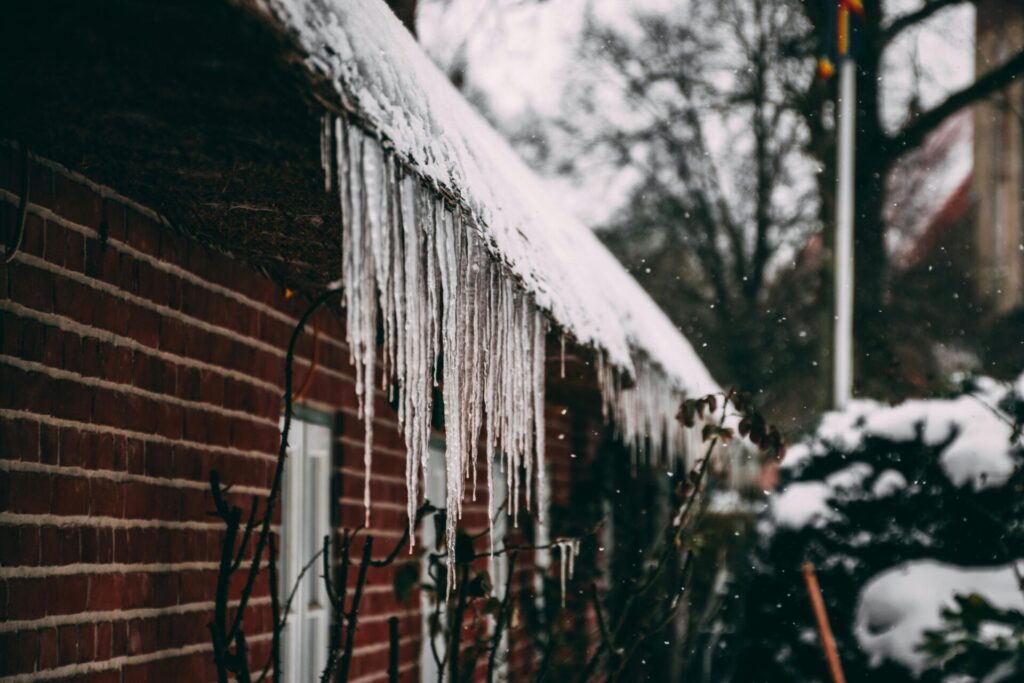
4. Ice Build-Up Along Rooflines
Ice build-up, particularly in the form of icicles, is a telltale sign of an ice dam. Icicles are the result of water not draining off the roof through proper channels and should be investigated before damage occurs.
5. Uneven Snow Melt
Ice dams are ultimately caused by uneven roof temperatures, which means it is sometimes possible to diagnose ice dam formation based on uneven snow melt. Typically, the snow will melt at the highest part of the roof but remain on the lower parts, which is where the ice dam can start to form.
How to Remove an Ice Dam
Removing an ice dam involves making a path for melted snow to flow off the roof. Using a garden hose to melt ice during the day will allow water to flow off the roof until temperatures dip below freezing once again.
Although ice dam removal is straightforward, it can also be labor intensive and only provides a short-term solution. Without making changes to ensure a more uniform roof temperature, the problem will persist every winter, even with professional ice dam removal service.
How to Help Prevent Ice Dams
There are a few ways to leverage ice dam prevention before problems start, including regular snow removal and proper attic insulation.
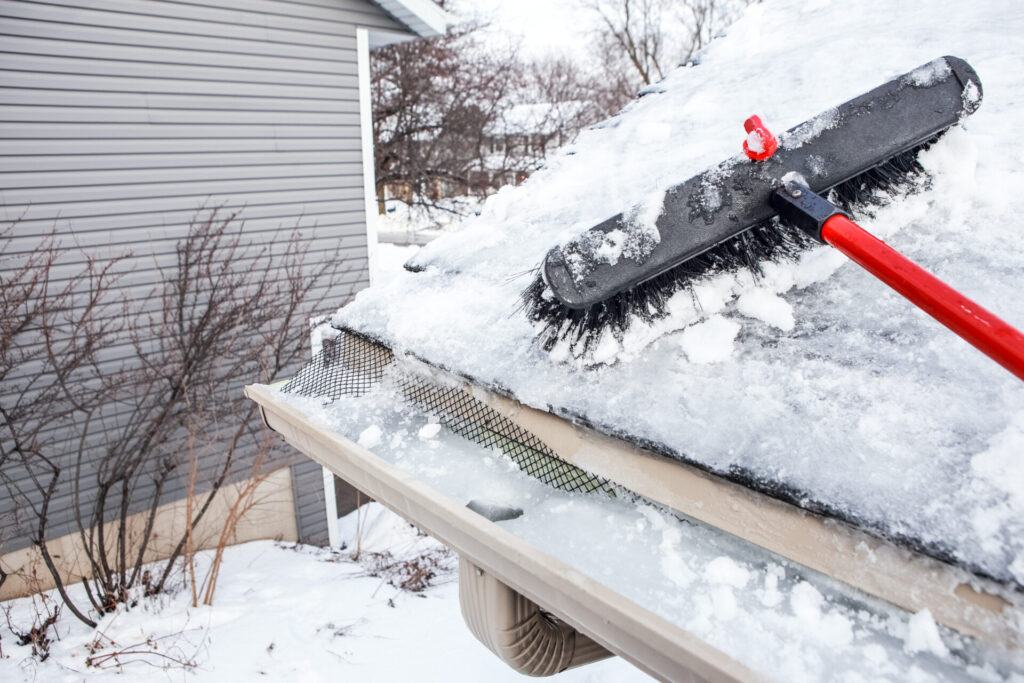
Roof Raking
Roof raking is one way that homeowners can prevent ice dams during the winter. Specially designed roof rakes allow you to sweep snow off the roof so there is no melted snow available to form an ice dam.
Professional Snow Removal
For homeowners who are not able to do the heavy manual labor of snow removal themselves, professional snow removal is another option. Professional-grade snow removal tools can get the job done quickly, and a regular winter contract keeps your roof clear in every storm. Search for “ice dam removal near me” to find reputable snow removal services.
Improve Attic Insulation
Inadequate attic insulation is a root cause of ice dams. The more heat that escapes from a home’s top floor, the more uneven the roof temperature, which could lead to the formation of an ice dam. An attic insulation contractor can help you choose the best insulation for attics so you can keep your home’s attic temperature appropriate in the winter and every other season.
Clear Gutters
Regularly clearing gutters is good practice for any homeowner. Gutter debris can create ice back up on the roof and ultimately create ice dams, or make them worse. Gutters should be free from leaves, sticks, and other debris in order to work properly.
Prevent Costly Roof Repairs by Installing Proper Insulation
Proper attic insulation is the best way to address or prevent ice dams. When an attic stays cold in the winter, ice dams will not have the opportunity to form, protecting your roof and yourself from costly repairs. The attic insulation contractors at Wisconsin Home Improvement have helped many homeowners upgrade their attic insulation to make their homes more comfortable, safer, and more durable. Before your roof sustains expensive damage from ice dams, contact WHI for ice dam repair help.