Home Performance with WHI
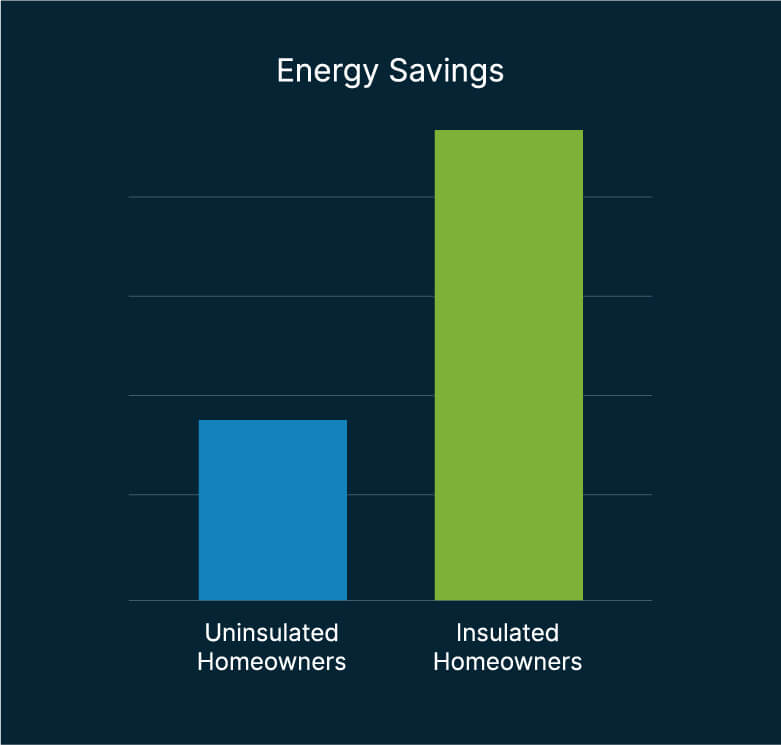
Wisconsin Home Improvement’s expertise is built on years of insulation contracting, so we know improving insulation is one of the most cost-effective ways to improve a home’s energy performance. However, over the years, we have also learned that homeowners and businesses can save as much as 20% on their energy bills by taking some basic home energy improvement steps that reduce waste, improve efficiency, and qualify for state and federal tax credits and rebates.
Reducing Energy Waste in Your Home
It’s possible to reduce your home’s energy waste and improve efficiency in a number of ways. At Wisconsin Home Improvement, we begin our process with a full home energy audit to reveal areas of weakness and help clients begin the process of home energy improvement.
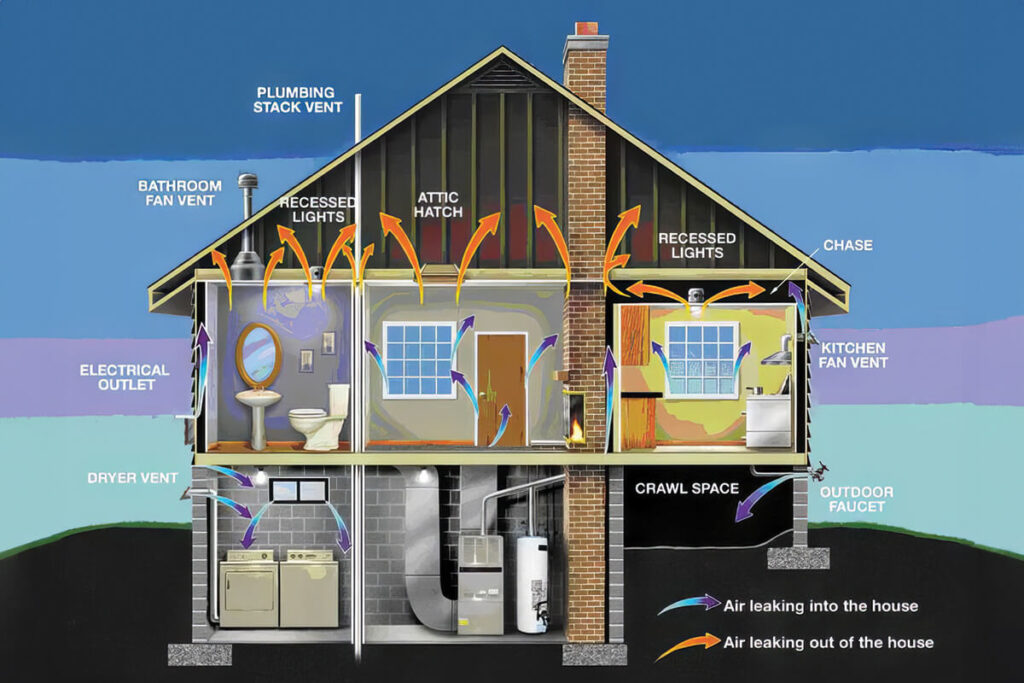
How to Make Your Home More Energy Efficient
A Wisconsin Home Improvement professional will conduct an inspection and review with you the ways to improve your home’s energy efficiency. Common options include:
- Air Sealing
- Installing Insulation
- Rim Joist Insulation
- Improving Ventilation
- Sealing Ducts
- Attic Ventilation


Save 20% On Your Energy Bill Today
Free Home Performance Audit
Our free Home Performance Audit service offers a comprehensive evaluation of your home’s energy efficiency.
- Detailed assessment of energy usage and loss
- Identification of inefficiencies and potential upgrades
- Personalized recommendations for energy-saving measures
Benefits of Energy Efficiency
New Home Construction
Our affiliate company, Wisconsin Insulation Services, provides professional new home insulation, remodeling services, and basement waterproofing to ensure the highest level of comfort for your new home in southeastern Wisconsin. We have a deep understanding of how your home’s performance can affect your comfort and efficiency.
Exterior Rim Joist Insulation
We often use rigid foam or spray foam to insulate the interior of rim joists. Insulating the exterior is another option. Using rigid foam in a continuous layer may be enough, but adding additional insulation to the interior can increase the R-value for optimal results.
Next Steps to Reaching Full Energy Efficiency
Making your home energy efficient is a tailored process, with the timeline varying depending on the specifics of your home. The first steps are a lot simpler — it all starts with a home energy audit. Contact us today to schedule an in-home visit. We will start by performing your audit, and then Wisconsin Home Improvement experts can help you figure out what next steps you should take, including finding ways to help out with payment and exploring tax breaks, incentives, and financing options.
Frequently Asked Questions
Here are some common questions we get about home insulation improvements and how insulation works. If you have a question and don’t see the answer below, please let us know.
Are there any other federal programs or incentives?
Yes. Several programs at both the state and federal levels allow homeowners to take advantage of ways to save when they choose to upgrade their home’s energy efficiency. These include tax breaks and rebates. Ask your Wisconsin Home Improvement energy audit professional about which of these rebates your home could receive.
What are some ways to build a very energy-efficient home?
It’s possible to increase your new home’s energy efficiency in various ways, including choosing systems like HVAC and water heaters that are built to be efficient. However, two of the most important components of any energy-efficient home are insulation and air sealing, both of which help maintain low energy bills and prevent damage to the home in the future.
What are the most essential home upgrades for improving performance?
Similar to new home construction, the most important improvements that reduce energy waste in the home are insulation, air sealing and ventilation. In addition, during a home energy audit, homeowners will learn about particular pain points within their homes, which may include issues with sealing and ducts.
What is the importance of residential energy efficiency?
Residential energy efficiency can help save the environment, but, more importantly, it can lower your homes carbon footprint while simultaneously reducing monthly energy bills.
How do I know if my house is energy efficient?
The only way to find out about the relative energy efficiency of your home is to undergo a full home energy audit conducted by an experienced and professional company, such as Wisconsin Home Improvement.
What is the best home energy score?
The Pearl scoring system assigns points to home features based on how much they contribute to the home’s performance. The more points a feature earns, the more it contributes to comfort, indoor air quality, and energy efficiency